
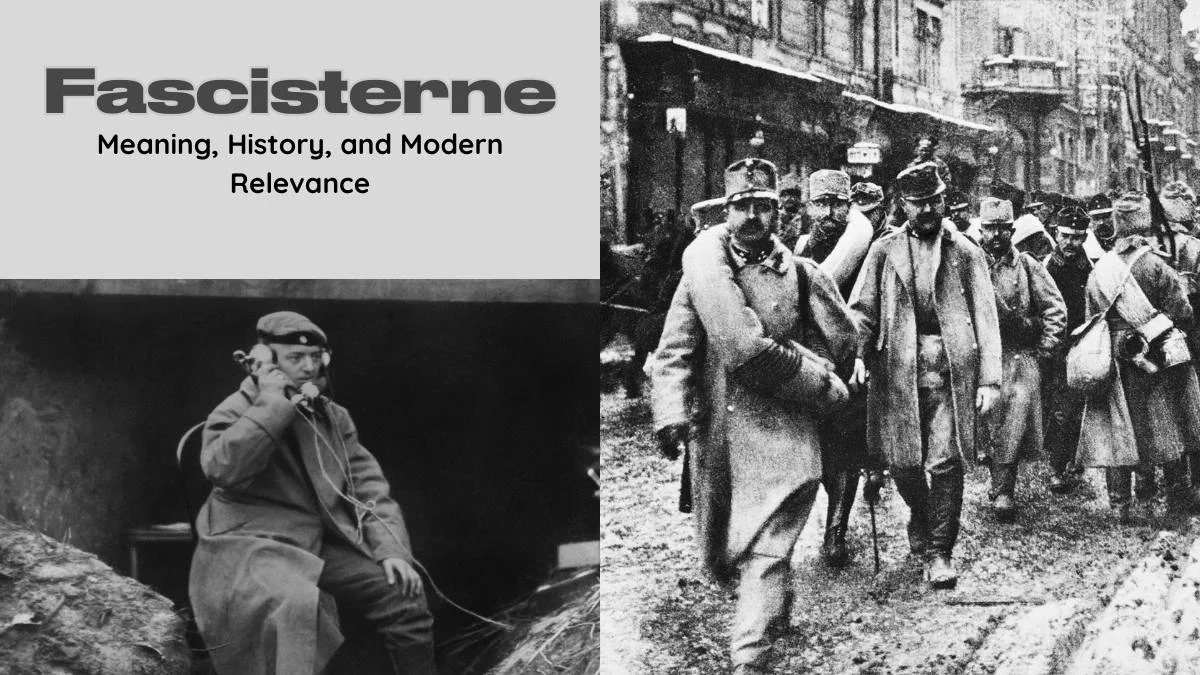
Have you ever wondered why ordinary people get swept up in movements that promise strength and unity but deliver division and destruction? “Fascisterne,” a term from Scandinavian languages meaning “the fascists,” captures the essence of those who champion fascist ideologies—groups driven by extreme nationalism, authoritarian control, and a craving for order in chaotic times. In a world still grappling with echoes of the past, understanding fascisterne isn’t just history homework; it’s key to spotting similar patterns today. This article dives into the rise, impacts, and hidden angles of fascist movements, blending stories of real people with insights on what draws them in and where it might head next. We’ll keep it straightforward, relatable, and backed by facts, so you can see the human threads weaving through it all.
What Exactly Is Fascisterne? A Clear Explanation
At its core, fascism is a far-right political ideology that puts the nation—or sometimes a specific race—above everything else. It thrives on a strong leader who demands total loyalty, crushes opposition, and uses propaganda to rally the masses. Think of it like a tight-knit club where the boss calls all the shots, and anyone who disagrees gets kicked out. The word “fascism” comes from the ancient Roman “fasces,” a bundle of sticks symbolizing unbreakable strength in unity—but with an axe in the middle for punishment.
Fascisterne aren’t just historical villains; they’re people who believe in a rigid social order where the strong lead and the weak follow. This mindset rejects democracy, seeing it as messy and weak, and instead pushes for militarism and control. Often, it preys on fears—like economic crashes or social changes—offering simple solutions to complex problems.
The Historical Rise: How Chaos Bred Fascisterne in Europe
Picture Europe after World War I: economies in ruins, millions jobless, and a sense of humiliation hanging in the air. This was the perfect storm for fascisterne to emerge. In Italy, Benito Mussolini marched on Rome in 1922, promising to revive the glory of ancient empires. He built a cult around himself, using violence and media to silence critics. In Germany, Adolf Hitler tapped into similar resentments, blaming minorities for the nation’s woes and leading the Nazis to power in 1933.
They fed on everyday frustrations—think a factory worker losing his job or a family struggling with inflation. Leaders like Mussolini and Hitler positioned themselves as saviors, using rallies and symbols to create a sense of belonging. The result? World War II, genocides, and millions dead.
Fascisterne Goes Global: Echoes Beyond Europe
While Europe gets the spotlight, fascisterne-inspired groups popped up worldwide, adapting to local flavors. In Latin America, movements like Brazil’s Integralistas in the 1930s wore green shirts and echoed Mussolini’s calls for national revival, though they were crushed after a failed coup. Argentina’s Juan Perón blended fascism with populism, creating a system that looked socialist but prioritized strongman rule and nationalism.
In Asia, Imperial Japan during WWII embodied fascist traits with emperor worship, militarism, and expansionism. Africa’s apartheid in South Africa drew from racial hierarchies similar to Nazi ideas, enforcing segregation through state control. These examples show fascisterne isn’t just a white European thing—it’s a adaptable virus that infects societies feeling threatened by change, from postcolonial struggles to economic inequality.
The Pull of the Personal: Psychological Drivers Behind Joining Fascisterne
Why do regular folks join these movements? It’s not always about hate; often, it’s about healing inner wounds. Psychologists point to feelings of loss and shame—maybe from a war defeat or job loss—that turn into grievance. Imagine a young man feeling emasculated by unemployment; fascisterne offers him a “tribe” where he can reclaim pride through strength and loyalty.
Studies show cognitive biases play a role: people seek simple answers in uncertain times, and fascist leaders provide scapegoats—like immigrants or elites—to blame. It’s like group therapy gone wrong, where shared rage bonds members. But this “us vs. them” mindset can lead to violence, as seen in hate group to act out. Understanding this human vulnerability helps us spot early signs in today’s polarized world.
The Money Trail: Economic Policies and Lasting Scars
Fascisterne regimes weren’t just about politics; they reshaped economies too. They mixed state control with private ownership—a “corporatist” system where businesses served the nation, not just profits. In Italy, Mussolini pushed autarky (self-sufficiency) through “battles” for wheat and materials, but it led to shortages and hardship.
Long-term? These policies propped up elites while squeezing workers, widening inequality. Post-war, countries like Germany rebuilt with democratic capitalism, but fascist echoes linger in modern protectionism. Think of it as a short-term boost (like Italy’s 1920s growth) followed by crashes, teaching us that economic control without freedom breeds instability.
Gender, Marginalized Groups, and the Hidden Battles
Fascisterne movements enforced strict gender roles: men as warriors, women as mothers breeding the next generation. But women weren’t passive; some joined for empowerment within limits, like Italian girls learning domestic skills while boys trained for war. Marginalized groups suffered most—Jews, LGBTQ+ folks, and minorities were scapegoated as “threats” to purity.
Resistance came from these edges: women in underground networks, queer activists defying norms. Today’s authoritarians still weaponize gender, attacking rights to rally bases. It’s a reminder that inclusivity is fascism’s kryptonite.
The Devastating Impacts: Lessons from the Wreckage
Fascisterne left scars: eroded freedoms, persecuted minorities, and wars that reshaped the globe. Societies divided, cultures censored, economies regimented—all for a “greater good” that benefited few. Yet, it taught us vigilance: strong institutions and education can prevent repeats.
Peering Ahead: Fascisterne in a Tech-Driven Future
Fast-forward to now: technology could supercharge fascisterne. AI and social media spread propaganda faster, creating echo chambers that amplify biases. Imagine “techno-fascism,” where algorithms enforce loyalty and surveillance tracks dissent. Climate crises or AI job losses might fuel new movements, with leaders using data to manipulate masses.
But tech can fight back: digital literacy and ethical AI could promote democracy.
In wrapping up, fascisterne reminds us that history isn’t just dates—it’s about people seeking belonging in tough times. By humanizing these stories, we can build empathy and guard against repeats. Share your thoughts: Have you seen fascist echoes today? Let’s keep the conversation going for a freer tomorrow.

Abdulrahman
Tech writer at whatsontech.net
who loves to write about Ai tools, Apps and Tech guides.